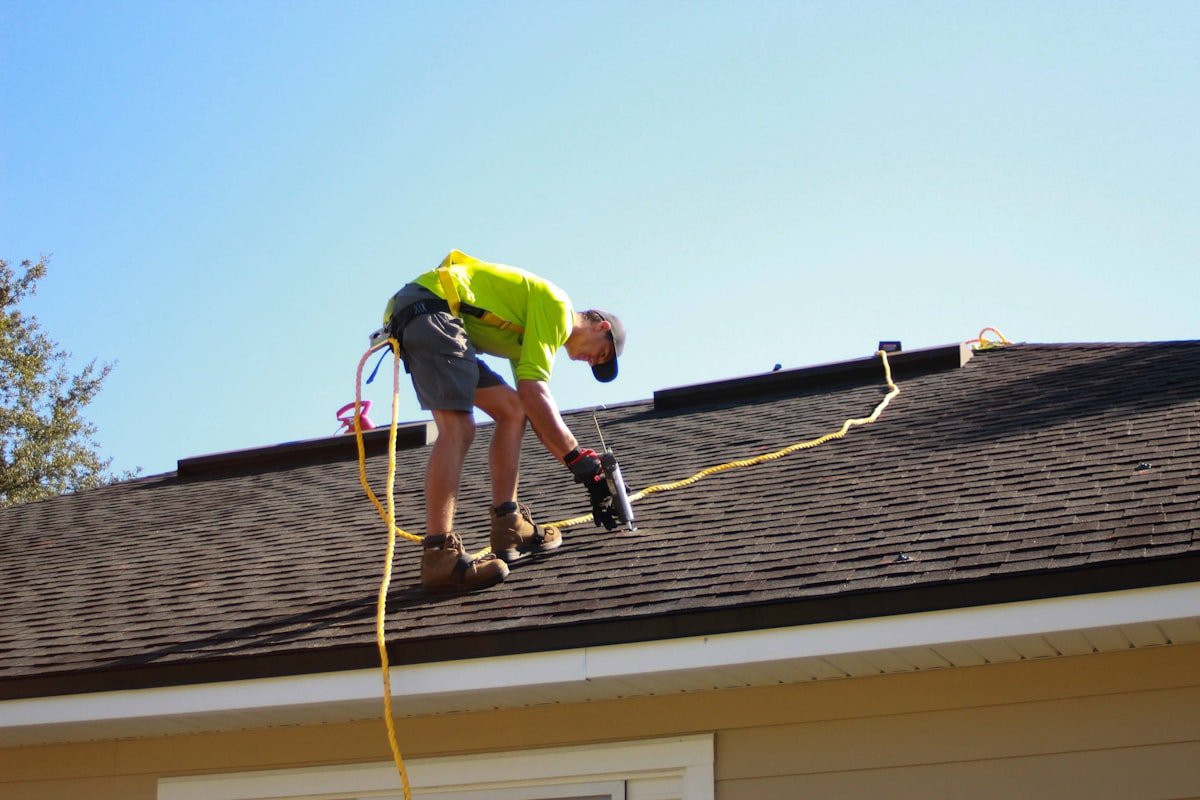
After Storm Eunice we processed 60 insurance-claim jobs in a fortnight. Three quarters were straightforward. The quarter that were difficult had one thing in common: the landlord hadn't documented anything in the first 48 hours. Here's how to be in the easy three quarters.
First 24 hours: don't fix it yet
The instinct is to make it stop leaking. Resist — for a few hours. Your insurer will want photos of the damage, not photos of a temporary tarp. Take pictures first, then have someone make-safe.
What to photograph:
- Wide shot of the property from the street (provenance)
- Wide shot of the affected roof slope
- Close-ups of every damaged area
- Internal damage — every affected room, every wet patch
- Date-stamped if your camera supports it
Make-safe vs permanent
"Make-safe" is the industry term for temporary works that prevent further damage — typically a tarp, a temporary patch, a board over a broken window. Insurers expect you to do this and will reimburse it; they will not reimburse you for choosing to leave it leaking for a week.
Permanent repairs come later, with their authorisation. Don't authorise permanent work until you have a claim number and a written acceptance — anything you spend before that point is at your risk.
What insurers actually want from a roofer's quote
A claim-ready quote isn't the same as a normal quote. It needs:
- Scope broken out line-by-line, with material specs and unit quantities
- Cause-of-damage assessment — was this storm-driven or pre-existing wear?
- Photographic evidence annotated to show each issue
- Like-for-like material specification where the policy mandates it
- Make-safe details if already carried out, itemised separately
The "cause of damage" line is where most claims live or die. If your roofer can credibly evidence that this damage was caused by the named storm event — not by general wear — you'll usually be paid out. If they fudge it, the insurer's loss adjuster will challenge it.
The loss adjuster visit
For claims over about £1,500, your insurer typically sends a loss adjuster to verify the damage. Things that go well in that visit:
- You have a folder ready — photos, quotes, make-safe receipts, all the evidence
- Your roofer can be on site or on the phone, to answer technical questions
- The damage hasn't been "fixed" yet (beyond make-safe)
Policy gotchas to watch for
- Maintenance exclusions: most policies exclude damage caused by lack of maintenance. If your gutter has been blocked for 5 years and the resulting saturation caused the leak, you may not be covered.
- Storm-event thresholds: some policies only cover "storms" if wind speed exceeded 55 mph in your postcode. Check Met Office data for the event.
- Wear-and-tear cap: some policies pay only depreciated value on roof components older than 20 years.
- "Approved trader" lists: some insurers will only pay claims if you use one of their approved contractors. Read the policy.
How we help
For every storm-damage job we take on, we provide the documentation pack insurers want — for free — whether you use us for the actual repair or not. Photos, written cause assessment, itemised quote in claim format, and a phone call to your loss adjuster if needed. It's faster for everyone.
Storm damage right now?
We have a prompt emergency line and our average response across SE London is under 4 hours.